


Where corn wouldn’t grow yesterday, it grows today
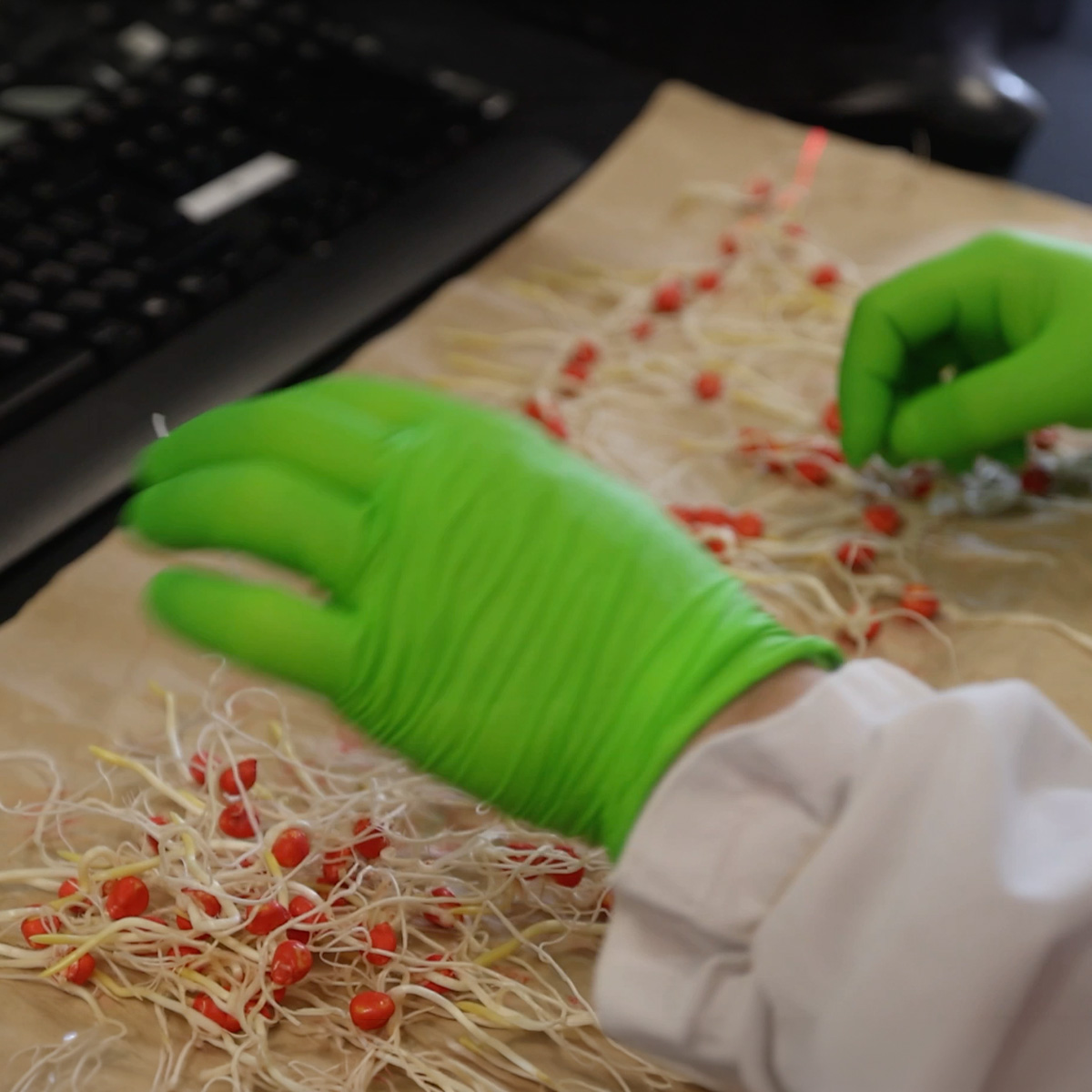
For Andrzej Kurtys, one of the most spectacular changes of recent decades is due to genetic progress. More varieties, greater earliness, more adaptation possibilities: today’s corn is no longer the one he started growing nearly 40 years ago.
When Andrzej talks about varietal progress, he doesn’t stay in the abstract. His formula is simple: “Genetic progress is immense.” He explains that in Poland, the choice of varieties is now very vast and makes it possible to adapt corn to the soil type as well as to the desired earliness.
He explains that in Poland, the choice of varieties is now very vast and makes it possible to adapt corn to the soil type as well as to the desired earliness.
Pushing the boundaries of crop production
Andrzej gives a particularly telling example: in certain areas of northern Poland where, according to him, corn was still absent a dozen years ago, crop production is thriving today.
This field observation aligns with a major challenge for European breeding: offering genetic diversity to adapt varieties to the different soils, climates, practices, and uses found across the continent. Varietal supply and breeding work are key drivers for adapting corn to European contexts.
Testing to choose
This diversity must then be put to the test in the field. This is what Andrzej has been doing for ten years on his farm, which hosts varietal trials every year. In 2026, 66 varieties are planted there, then compared at harvest according to their yield and moisture content.
Choosing a variety thus becomes a true agronomic decision-making lever. It is no longer simply a matter of “growing corn,” but of finding the corn suited to a plot, a climate, an earliness objective, and an end-use market.
→How do we select tomorrow’s hybrids? Go behind the scenes of varietal innovation in our video.
Varietal breeding: a lever for more sustainable corn
Faced with climate change, varietal breeding is no longer limited to the search for yield. Drought tolerance, adaptation to thermal stress, better nitrogen efficiency, disease resistance, and nutritional quality: seed companies are multiplying their selection criteria to develop more resilient corn varieties adapted to production conditions and farmers’needs
Better than AI: Agricultural Intelligence

Maize is a progress-based crop. Its breeding, seed quality, productivity, disease and pest tolerance, climate adaptation, and outlet versatility improve constantly.
Agricultural progress is built over time. Through plant breeding, agronomic innovation, and high-quality seeds, maize becomes increasingly productive and resilient each year. With enhanced disease resistance, climate adaptation, and optimized end uses: this continuous improvement gives farmers ever more precise and effective tools. It is a field-based intelligence shaped as much by science as by experience.