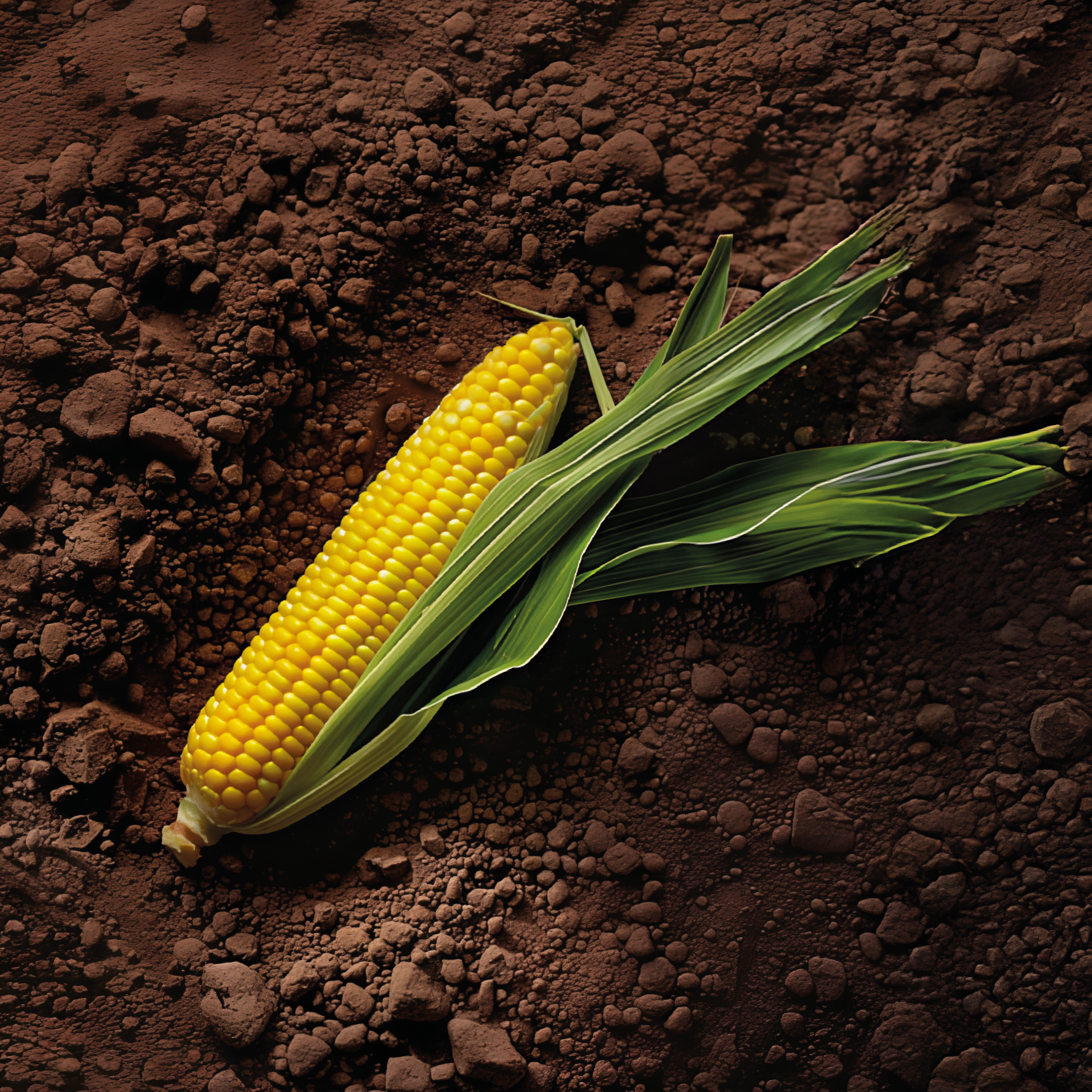
Maize and sorghum, keys to build our future.
Corn and sorghum are strategic crops that help strengthen the resilience of farms, diversify one’s income, and meet environmental requirements.
Within the current context of agricultural and climate transitions, the complementarity of the two crops in relation to the others has become a fact to many farmers and industry operators in Europe.
Assets Within the Climate Change Context

Corn and Sorghum Share a Major Botanical Characteristic:
the C4 photosynthesis. Their photosynthetic mechanism, which surpasses the C3 one – of the other grains – allows the plants to concentrate CO2 in specialised cells, thus reducing photorespiration and optimising the use of water and light, even at times of high heat and drought.
 Heat resistance:
The plants actively maintain their photosynthesis at high temperatures (around 30°C).
 Fast growth:
Rich production of biomass – which is ideal for food, feed, or biofuel.
 Water efficiency:
Up to two times less water needed per biomass unit (compared to C3 grains).
Corn and sorghum are the stars of photosynthesis, in the context of climate change.
Advantages to Farms

Corn and Sorghum Share Common Agronomic Characteristics,
which make them complementary and strategic on the European farms. By including them into their rotations, farmers can diversify their production, optimise inputs, and render their farms more resilient within the current context of climate and economic challenges.
 Technical Control and Cost Optimisation:
The production technologies are simple and the two crops have a wide and diversified range of hybrids, which allows them to adjust to various soils and climates.
 Organisation:
By growing the two crops, farmers are able to spread planting and harvesting operations evenly, throughout the production season.
 Income:
The diversity of the outlets that the two crops offer allows farms to secure their income.
Corn and sorghum, two crops that secure your yields and diversify your income.
Supply Advantages

Corn and Sorghum Integration Diversifies Rotations
and secures supply chains for downstream actors. The complementarity of the two crops helps to meet a wide range of needs while optimising related logistics and reducing dependency on imports.
 Outlet diversity:
Feed, food, biofuels, biomaterials, etc.
 Simplified logistics:
Grown alongside other grains, sorghum and corn can spread supply evenly throughout the year, which helps processors plan their work more easily.
 Risk reduction:
By diversifying their supply sources, the sectors limit their exposure to market fluctuations or geopolitical crises.
Corn and sorghum, two levers that secure your supply and diversify your sources.
Advantages Due to European Seeds and Genetics Innovation

Thanks to the European expertise in breeding and production, corn and sorghum have a large range of hybrids that can meet the requirements of all markets (food, feed, biofuels, biomaterials etc) and can adapt to all agronomic conditions (variable soil types, contrasting climates, diverse cropping systems).
 Genetic Innovation:
Disease resistance, water stress/heat tolerance, and optimum yields.
 Seed Quality:
Certified, high-performing, and traceable seeds that guarantee optimum crop establishment and maximum productivity.
 End-use Hybrid:
Hybrids that are developed for specific outlets and soil & climate conditions.