


International Study Tour: A Look Back at the FNPSMS Initiative
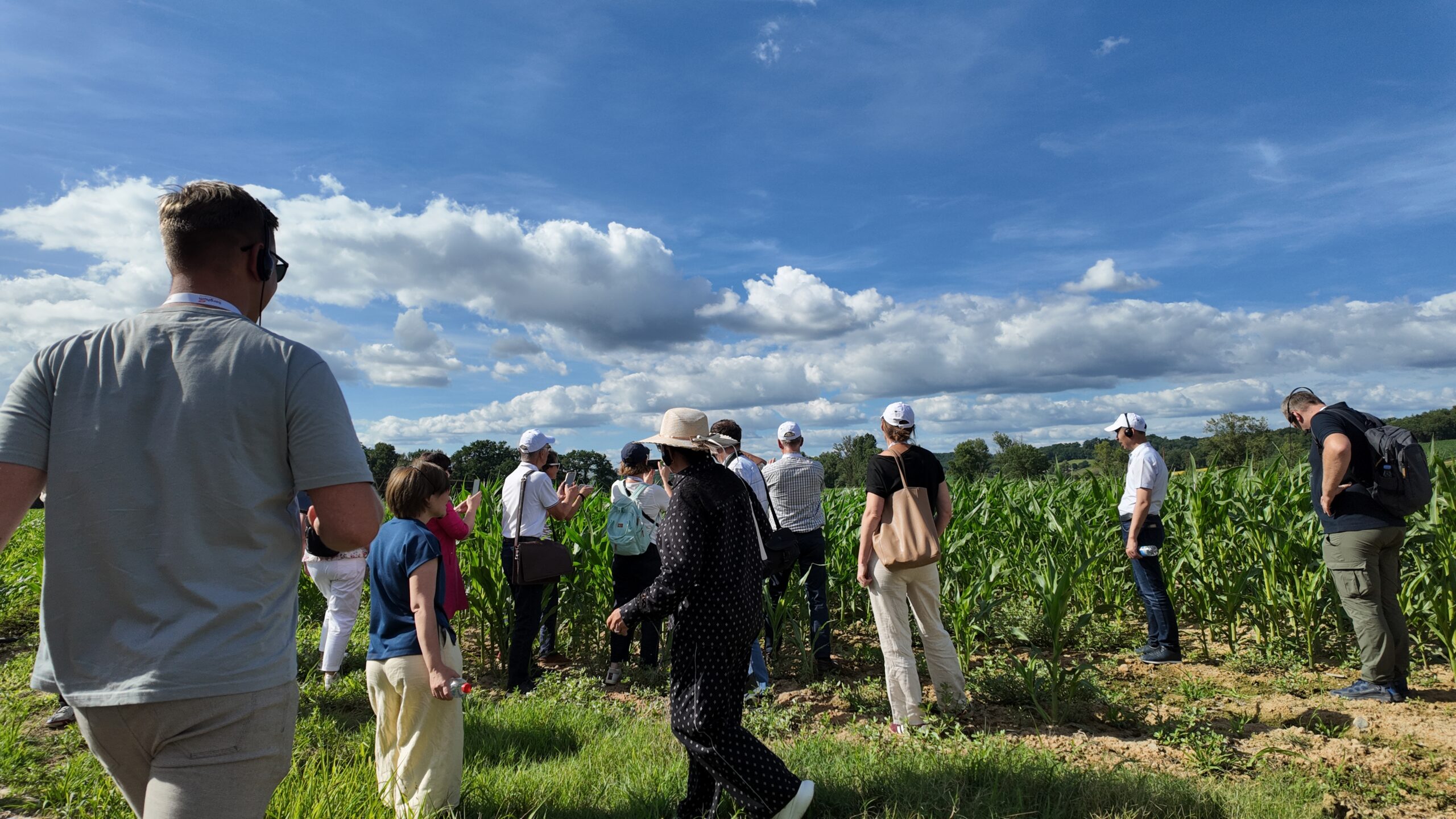
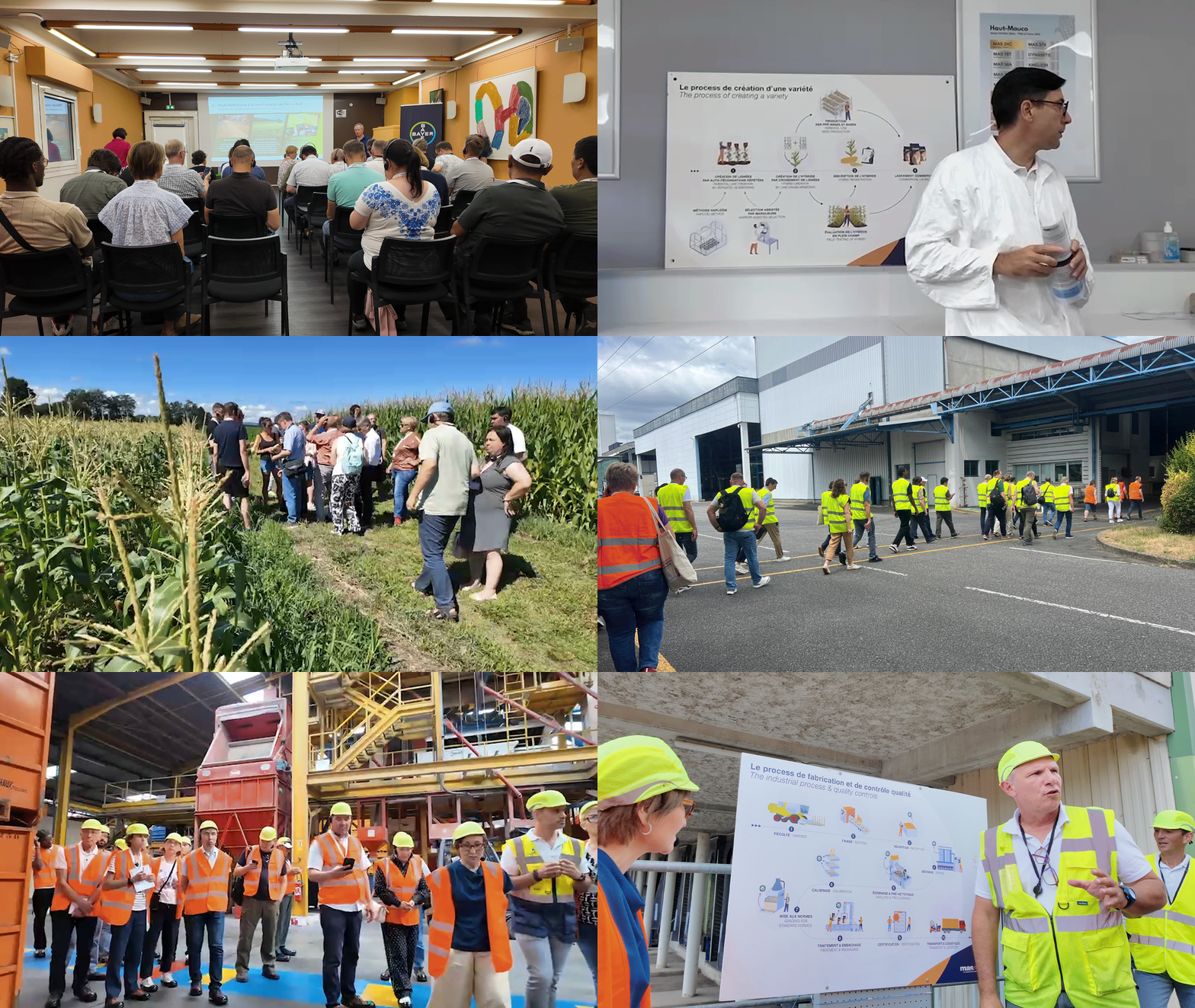
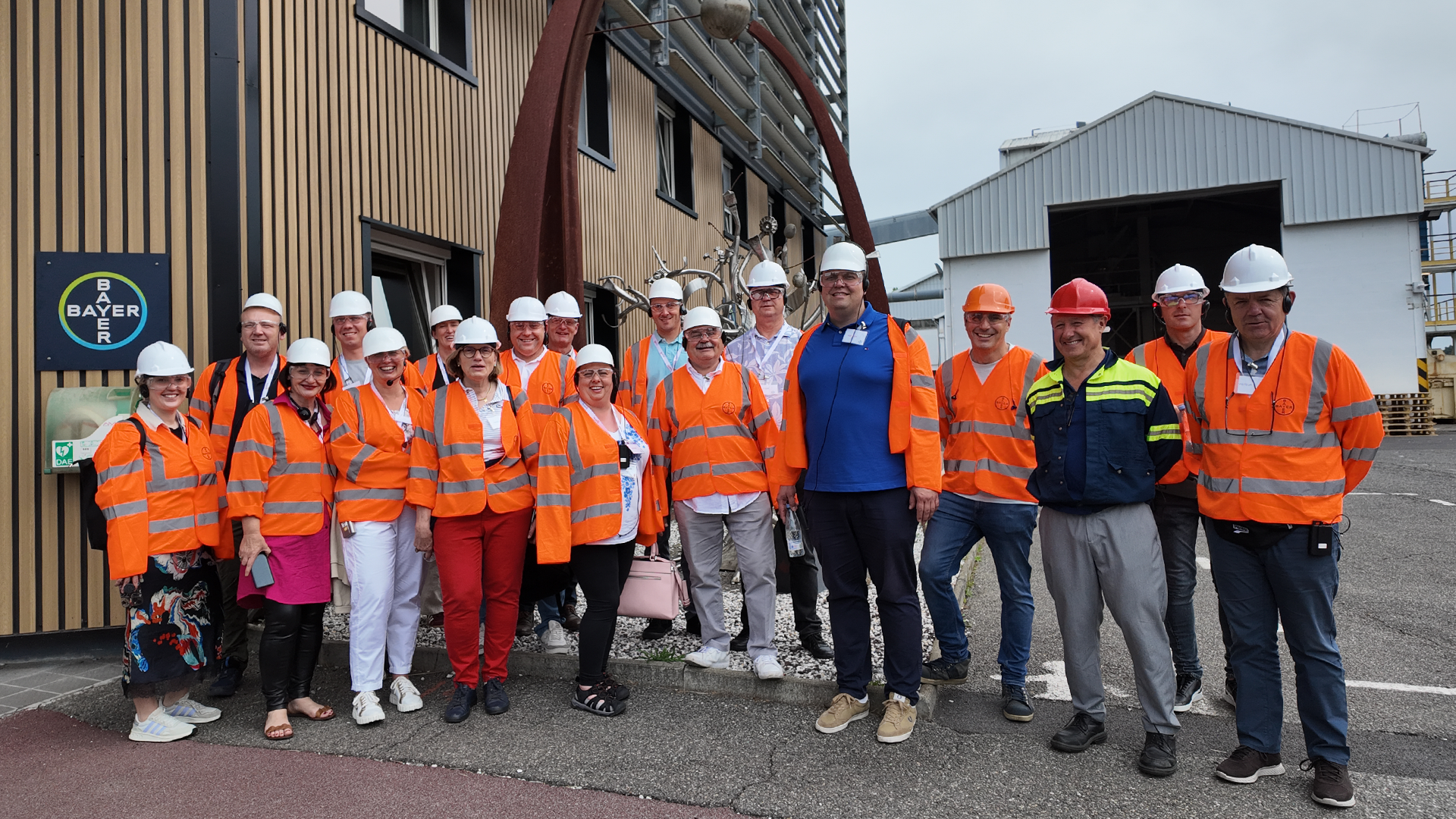
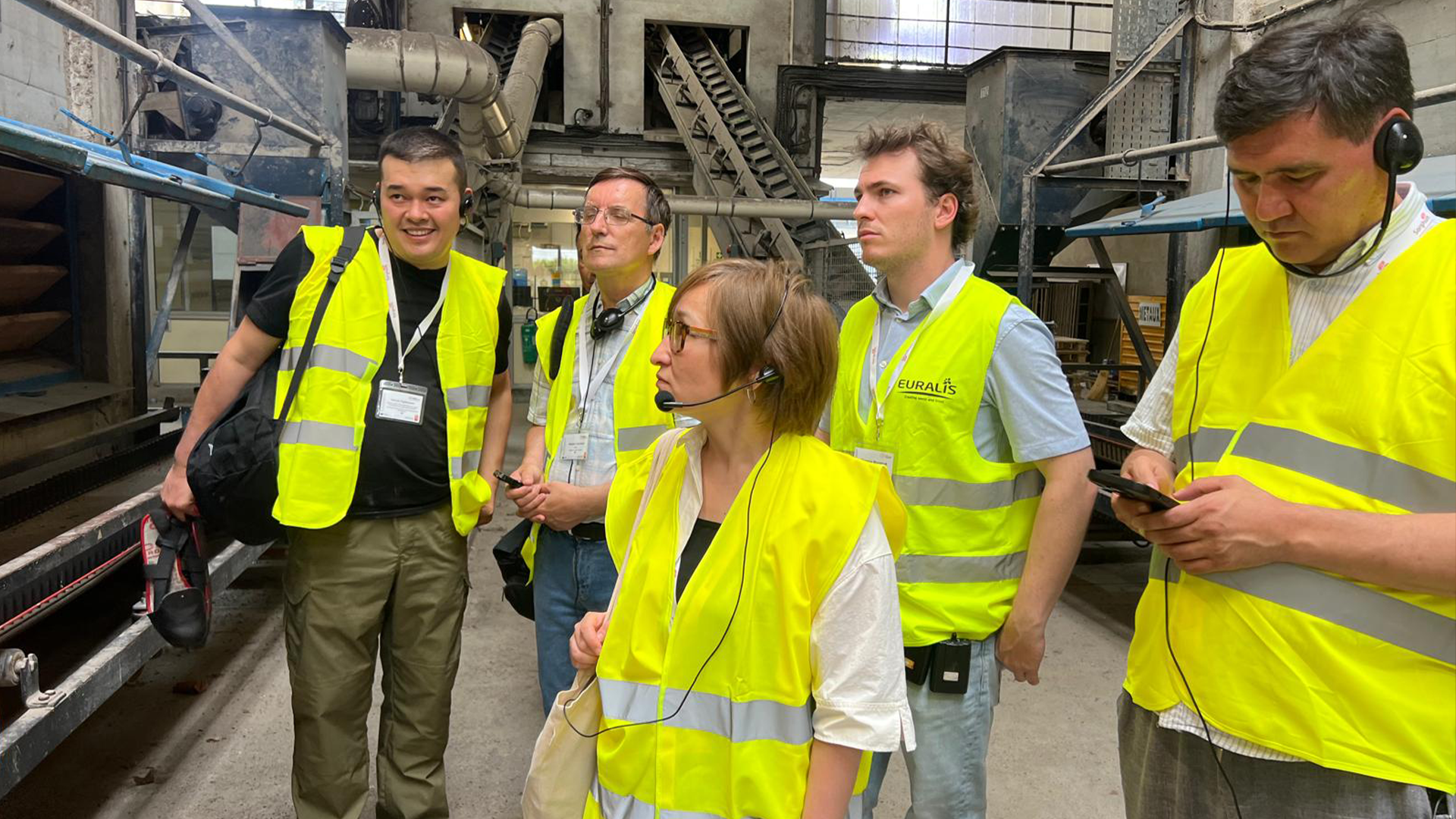
From June 29 to July 2, 2026, the FNPSMS welcomed an international delegation made up of farmers, distributors and agricultural advisers from Poland, Germany and France. Organised in south-western France, the historic heartland of maize cultivation in the country, the study tour aimed to showcase the technical expertise, innovation and excellence of the French maize seed sector, the world’s leading exporter of maize seeds.
Under the theme “Maize, a key to build our future” participants followed a comprehensive journey from the field to the processing plant, including visits to research laboratories, to gain a better understanding of how European seed companies are addressing the challenges of climate change and food sovereignty.
The visits provided an insight into the complexity of the maize seed production process, from field multiplication through to the bagging of seeds ready for planting. They highlighted the excellence of the sector, supported by quality standards that often exceed current regulatory requirements.
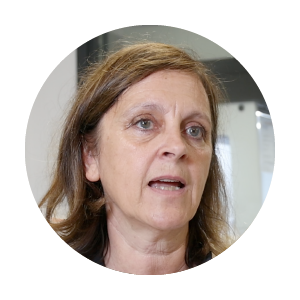
As Gwenola de Fontenay, EMEA Quality Testing Lead at Bayer CS (Bayer), explains: “Quality is a concern throughout the entire life of a seed lot. At every stage, from the field to the dryer, the plant, calibration and treatment, tests are carried out to make sure that the seed’s potential is not compromised. A lot undergoes at least 50 tests before it is released.”
Innovation in the Face of Climate Change
One key topic dominated the discussions: adapting to climate change. The breeders taking part in the tour explained how genetics are evolving to develop varieties that are more resilient to water and heat stress.
François Harambat, Strategic Marketing Director at MAS Seeds, highlighted a profound transformation in the profession: “Over the past ten years or so, plant breeding has become much more precise. Beyond yield, we are working on tolerance to biotic and abiotic stresses. Thanks to genomic data and AI, we have managed to reduce the time required to develop a new variety from ten years to five or six years.”
This acceleration was echoed by Kris Coppens, External Manufacturing Lead for Seeds EME at Bayer Crop Science, who emphasised the greater security genetic progress provides to farmers: “Today, genetic progress is about giving farmers greater security. Farming has become more risky due to market volatility and climate-related events.”
Quality and Trust: Delivering on the Promise
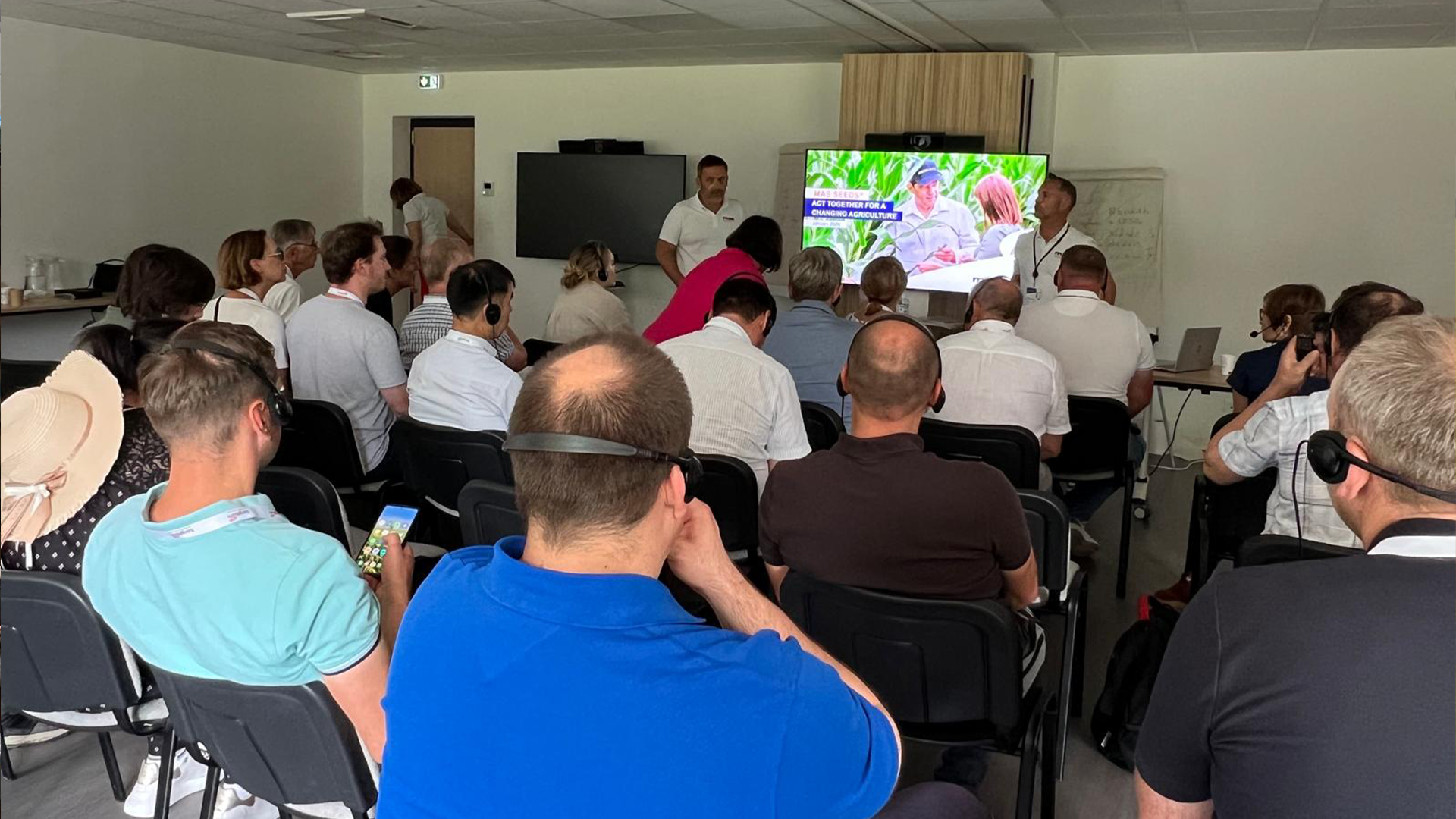
For the international visitors, another key objective was to understand what guarantees seed performance once the seed has been purchased. The answer lies in strict independent testing and high internal quality standards.
Anne-Marie Taché, Production and Supply Director at MAS Seeds, stressed the importance of this rigorous approach: “Buying quality seed means having the guarantee of achieving maximum yield. Our internal standards are higher than European standards. It is this high level of commitment, combined with independent external controls, that underpins the excellence of the French sector.”
Matthieu Çaldumbide, Public Affairs and Market Intelligence Leader at Lidea, highlighted the economic and sustainability benefits: “A high-performing variety improves sustainability because it requires less land and makes better use of natural resources such as water and nitrogen. Investing in a high-performance hybrid seed means making the most of your soil capital and securing your income, even under challenging conditions.”
Maize Seed Production and Field-Based Observation
The group visited La Ferme des Vallons, where they met with one of its managers, Benoît Laborde, a seed-multiplication farmer and President of the AGPM. This diversified family farm places maize at the heart of its production, including both grain maize and seed maize. The farm also includes a Gascon pig operation, a processing unit, several crops such as seed sunflower, barley and soybean, as well as vineyards producing Tursan AOC wines.
During lively discussions with the participants, Mr Laborde highlighted the importance of maize within his farm and the high level of technical expertise required to work as a seed-multiplication farmer.
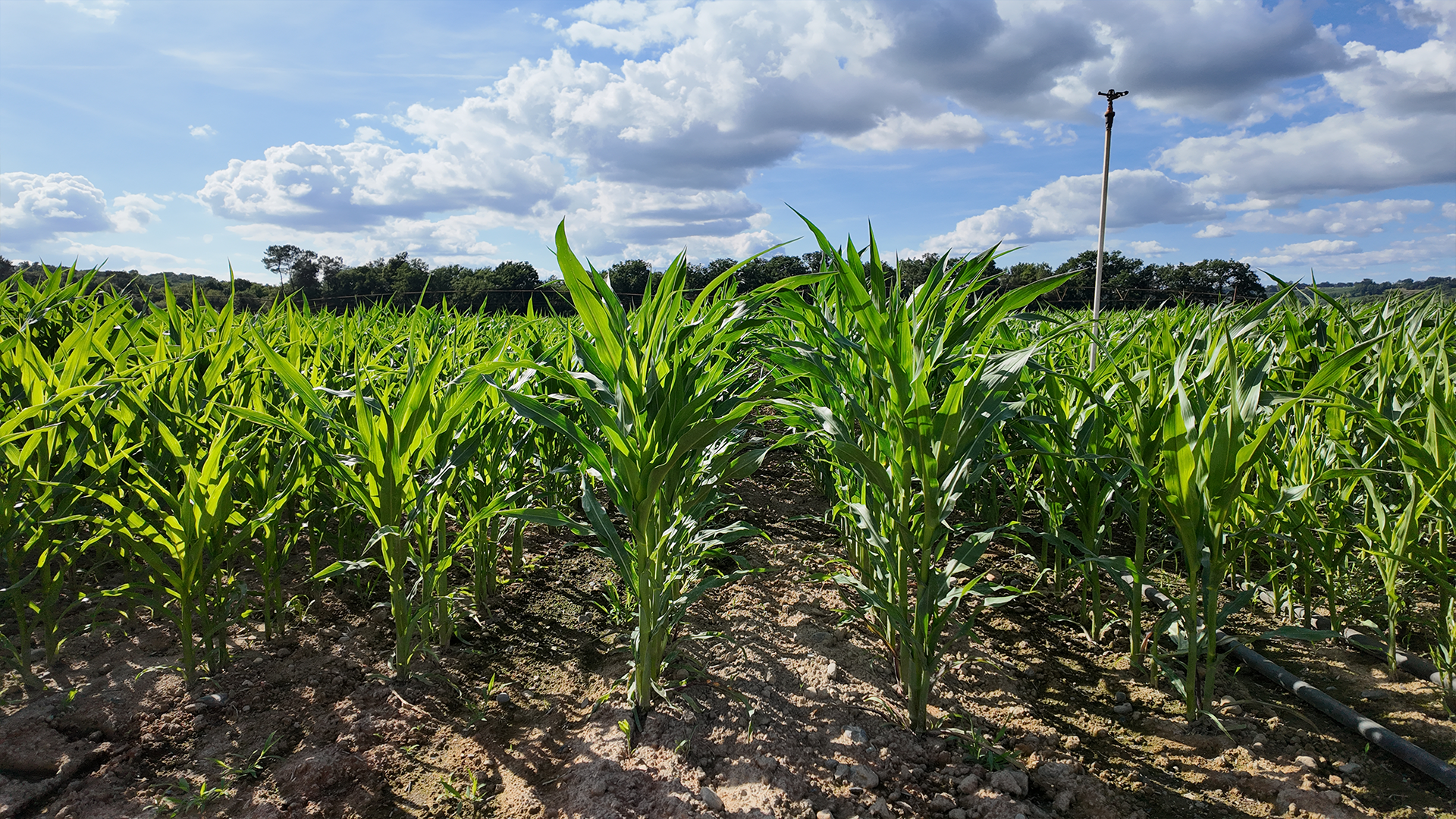
Finally, to conclude the study tour, the delegations visited Arvalis. Clémence Aliaga, Regional Engineer, guided the participants through the institute’s experimental plots and presented the research being conducted to address challenges related to maize cultivation and its various uses. The group also discovered the experimental anaerobic digestion facility and the potential of maize as an energy crop for biomass production.
A sector for the future, open to the world
This study tour confirmed that maize seed is much more than an agricultural product: it is a driver of technology and sustainability. Whether for animal feed, biofuel production or global food security, maize remains a crop for the future.
As Gwenola de Fontenay summarises: “For a farmer, high-quality seed is seed that guarantees their income, today and in the future, whatever the planting conditions.”
These meetings strengthen ties between stakeholders from around the world and contribute to showcasing a unique European expertise, capable of helping feed the world while preserving its resources.